Battery Electrolyte Market Outlook:
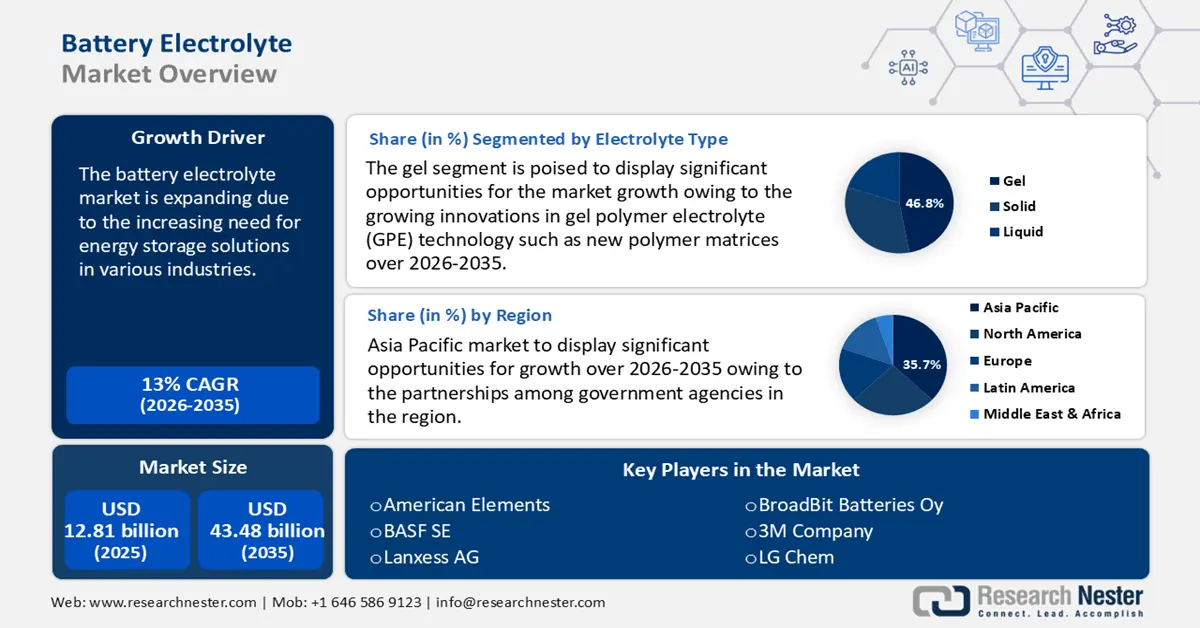
Battery Electrolyte Market size was valued at USD 12.81 billion in 2025 and is set to exceed USD 43.48 billion by 2035, expanding at over 13% CAGR during the forecast period i.e., between 2026-2035. In the year 2026, the industry size of battery electrolyte is evaluated at USD 14.31 billion.
The battery electrolyte market is witnessing tremendous growth due to the increasing need for energy storage solutions in various industries, including electronics, renewable energy, and automotive. Advanced electrolytes are becoming popular as grid-scale energy storage devices and electric vehicles are widely used. According to the International Energy Agency (IEA), by the end of 2022, the total installed grid-scale battery storage capacity was about 28 GW, most of which had been added during the preceding 6 years. Due to the addition of over 11 GW of storage capacity, installations increased by more than 75% in 2022 compared to 2021. The battery electrolyte is the most important component since it determines how effectively batteries function and contributes significantly to increased safety.
Additionally, the push toward reducing greenhouse gas emissions and growing environmental awareness has led to a significant increase in electric vehicle (EV) sales worldwide. Lithium-ion batteries, which rely on electrolytes, are the most commonly used energy storage systems in EVs, driving the need for high-quality electrolytes. According to IEA, in 2022, about 60% of lithium demand was for EV batteries. Also, governments worldwide are implementing stricter emissions regulations and providing financial incentives, such as tax rebates and subsidies, to promote EV adoption. This results in higher production and sales of EVs, further expanding the demand for battery components like electrolytes.