Artificial Intelligence (AI) in Medical Diagnostics Market Outlook:
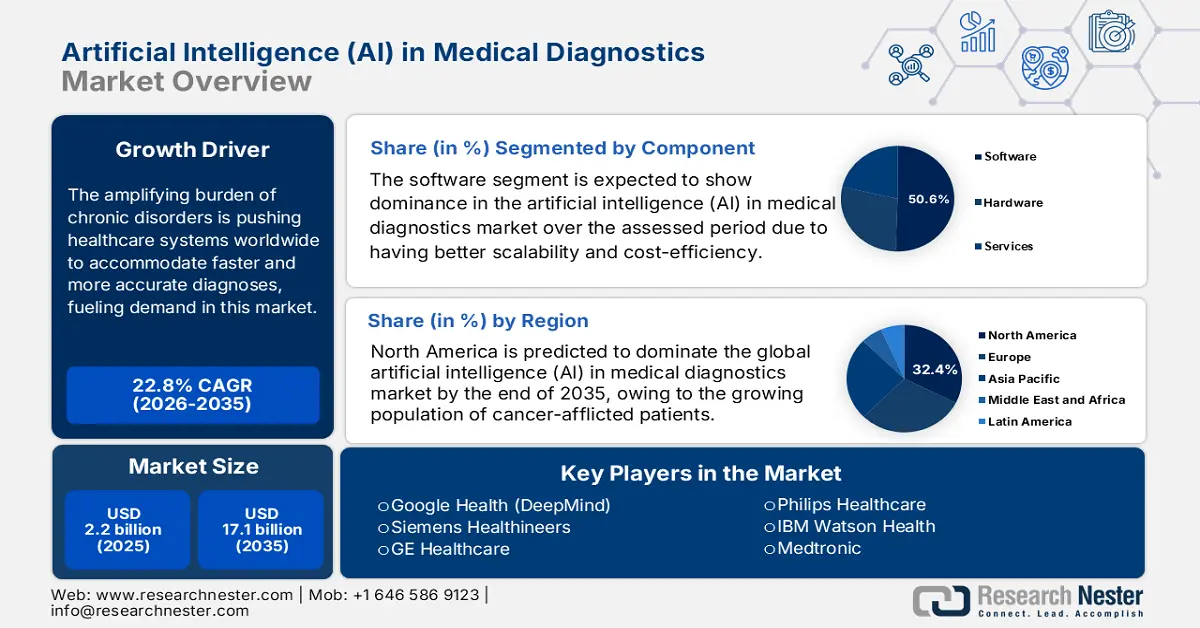
Artificial Intelligence (AI) in Medical Diagnostics Market size was valued at USD 2.2 billion in 2025 and is projected to reach USD 17.1 billion by the end of 2035, rising at a CAGR of 22.8% during the forecast period, i.e., 2026-2035. In 2026, the industry size of artificial intelligence (AI) in medical diagnostics is estimated at USD 2.7 billion.
The amplifying burden of chronic disorders is pushing healthcare systems worldwide to accommodate faster and more accurate diagnoses, fueling demand for artificial intelligence (AI) in the medical diagnostics market. According to the WHO report published in December 2024, 75% of the mortalities around the globe originated from non-communicable diseases (NCDs). Further WHO report in July 2025 states that 19.8 million people died from cardiovascular disease (CVD) in 2022. This demography testifies to the growing need for next-generation diagnostic methods and tools, such as AI-powered solutions, to enable early intervention for better outcomes.
The artificial intelligence (AI) in medical diagnostics market often presents notable economic pressure for payers, following recent trends in payers' pricing. As per the AHA report published in 2025, the U.S. has imported over $14.9 billion in medical equipment as of 2024, which encompasses items like MRI apparatus. The data reflects ongoing high demand and reliance on foreign medical equipment imports with the latest technology. Moreover, the heightening cost and resistance to AI implementation are limiting the optimum reach and adoption in this sector. On the other hand, the collective efforts from governing bodies and authorized insurers to increase public access to advanced diagnostics are minimizing this disparity.