Aortic Aneurysm Market Outlook:
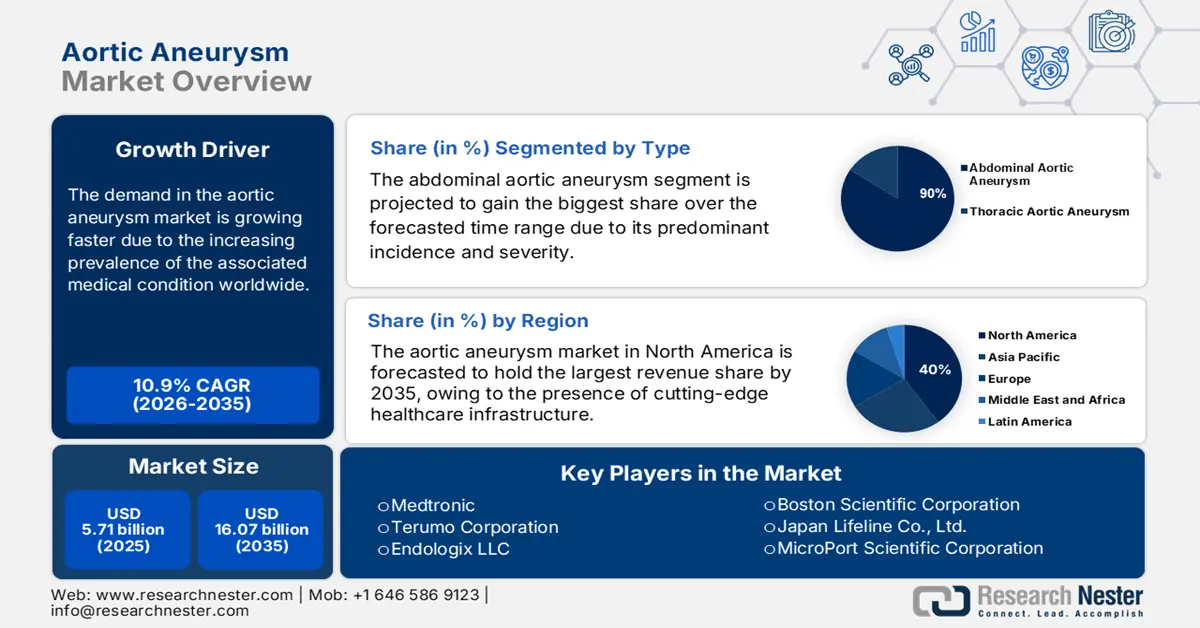
Aortic Aneurysm Market size was over USD 5.71 billion in 2025 and is projected to reach USD 16.07 billion by 2035, growing at around 10.9% CAGR during the forecast period i.e., between 2026-2035. In the year 2026, the industry size of aortic aneurysm is evaluated at USD 6.27 billion.
The demand in the market is growing faster due to the increasing prevalence of the associated medical condition worldwide. According to NLM, death cases of aortic aneurysm (AA) in all regions is expected to rise by 42.0% by 2030 from 2019, accounting for 244,685. The magnifying presence of high-risk factors, such as tobacco consumption, atherosclerosis, and the aging population, are accumulatively contributing to this demography. On this note, WHO reported that around 1.3 billion people across the globe were using tobacco products till 2023, where 80.0% of them originated from low- and middle-income countries. In addition, 49.2% of the cardiovascular deaths in 2023 caused by an atherosclerotic-mediated disease, ischemic heart disease (IHD): ScienceDirect.
Currently, organizations and healthcare authorities are putting efforts to reduce the payers’ pricing of available treatment options, such as OSR and EVAR, in the aortic aneurysm market to make them more accessible. In this regard, a real-world cost analysis was published by the Journal of Vascular Surgery in February 2020, which compared the expenses on nonruptured abdominal aortic aneurysms (non-rAAA). It established that the mean hospitalization expenditure on EVAR (USD 32,052.0) to be lower than OSR (USD 36,091.0). Simultaneously, another report study published by ScienceDirect in August 2023 identified Terumo Aortic RELAY stent graft to be a cost-effective solution for TAA. It further found the pricing of commercially available thoracic endovascular aortic repair (TEVAR) devices to range between USD 12,000.0 and USD 19,495.0.