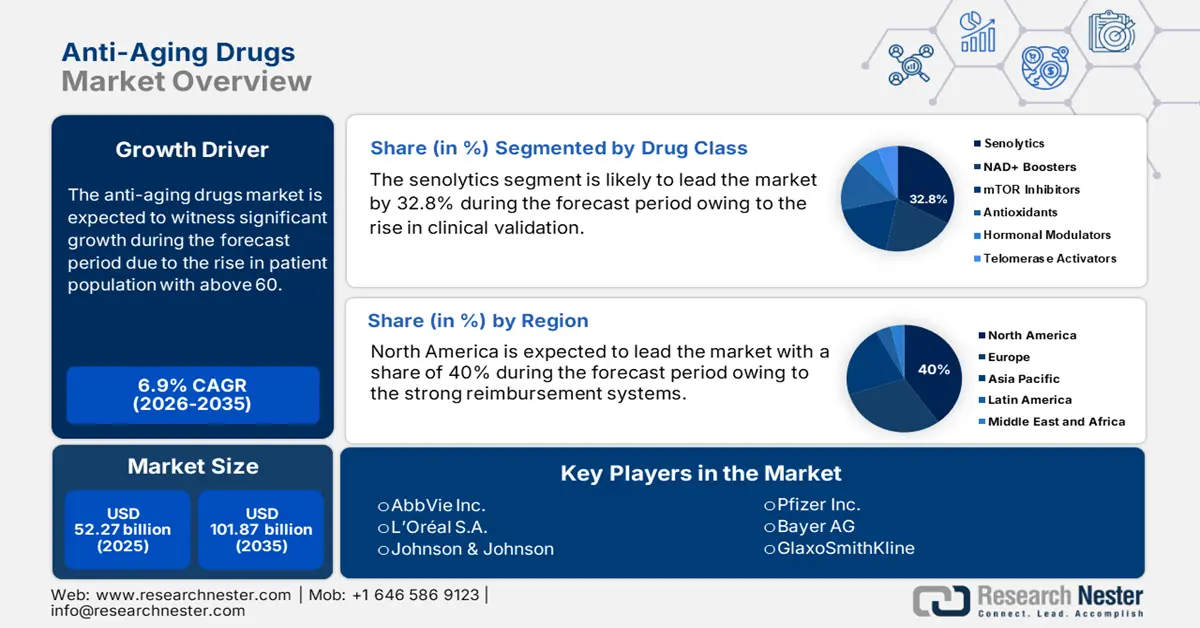
Anti-Aging Drugs Market Outlook:
Anti-Aging Drugs Market size was valued at USD 52.27 billion in 2025 and is projected to reach USD 101.87 billion by the end of 2035, rising at a CAGR of 6.9% during the forecast period, i.e., 2026-2035. In 2026, the industry size of anti-aging drugs is estimated at USD 55.88 billion.
The anti-aging drugs market is aided by a rising patient population, mainly among people above the age of 65. According to the World Health Organization, the global population aged 60 and above is projected to increase to 2.1 billion by 2050. This shift is rising the clinical demand for therapeutic interventions overcoming the age-related chronic conditions, including neurodegeneration, metabolic diseases, and cardiovascular dysfunction, where senolytic and NAD+ modulators are providing therapeutic potential. On the supply chain side, the anti-aging drugs and their active pharmaceutical ingredients are actively increasing. Therapies related to anti-aging, including NAD+ precursors, rely on synthetic vitamins and some intermediates imported from East Asia, mainly in South Korea and China.
The anti-aging drugs market is clearly changing fast due to scientific advancement and consumer shifts. Meanwhile, billionaire venture capital is rapidly changing the market along with AI drug discovery. There are also advances in research on senolytics and gene therapies to reverse/repair age-related cellular degeneration. In the consumer market, both NAD+ infusions and NAD+ supplements are surging in wellness-type and among celebrity groups, with longer efficacy data not yet available. Overall, AI and biomarker assessments are enabling new data-driven, personalized interventions to measure & slow biological aging. Finally, on a geographical basis, growth in the Asia-Pacific region is accelerating with a rapid increase in research funding combined with an accelerating e-commerce distribution.