Anti-Aging Drugs Market - Regional Analysis
North America Market Insights
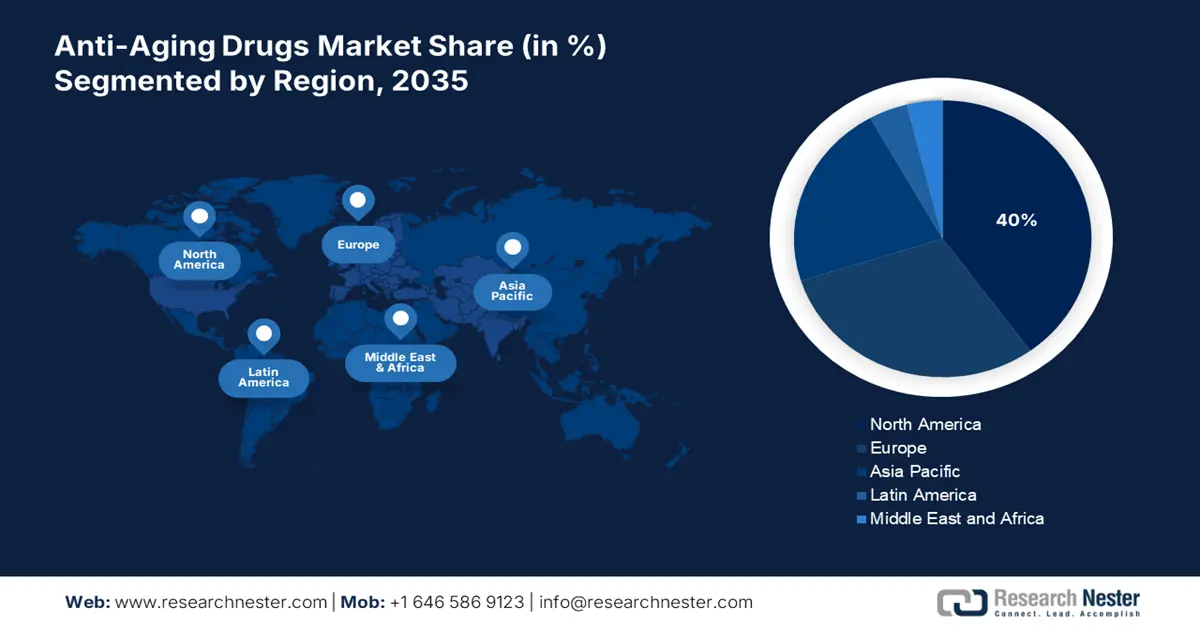
North America is dominating the anti-aging drugs market and is poised to hold a share of 40% at a CAGR of 13.8% by 2035. The region is driven by high federal healthcare expenditures, rising R&D intensity, and strong reimbursement systems. The U.S. Centers for Medicare & Medicaid Services forecast predicts that in 2023, U.S. health care spending increased by 7.5% to USD 4.9 trillion, or USD 14,570 per person. The region also benefits from advanced clinical infrastructure, increasing geriatric populations, and increasing direct-to-consumer digital pharmaceutical platforms. The area has supportive reimbursement plans, many clinical trials, and regulatory agencies that support new technologies and innovations. Additionally, longevity companies, increased awareness of anti-aging therapies, and positive consumer perceptions make North America the center of the global anti-aging drugs market.
Demographic trends, increased research investment, and more reimbursement coverage have created a healthy U.S. anti-aging drugs market. The U.S. remains the global leader in research and development and continues to garner significant funding from both government and private developments in developing senolytics, NAD+ booster therapies, and genetic therapies. Venture capitalists, billionaire-sponsored longevity companies, and pharma companies are all investing in preventative medicine. The convergence of these factors creates a potent ecosystem where the U.S. will be the primary engine of growth in the anti-aging drugs space.
The marketplace for anti-aging drugs in Canada is steadily increasing due to multiple factors related to demographic change, healthcare infrastructure, and consumers who are willing and able to embrace these therapies. Canada's robust healthcare system and a government that encourages the adoption of more advanced medications. Canadians are also habituated to having the healthcare system open to many options for dealing with the aging process. In addition, as middle-aged and elderly Canadians have greater access to disposable income as well as growing health awareness regarding their health, adoption is likely.
APAC Market Insights
The Asia-Pacific is the fastest-growing region in the anti-aging drugs market and is anticipated to hold a share of 21.8% at a CAGR of 15.2% by 2035. The region is witnessing strong growth, led by improving life expectancy, urbanization, and growing healthcare spending. Countries such as Japan, South Korea, and China are fueling the region by government prioritization of healthy aging and consumer awareness. Government policies are promoting public-private collaborations for drugs related to anti-aging clinical trials, drug approvals, and regional production to minimize import reliance. Further, key policy guidelines and budget shifts are transforming the region and driving the commercialization of anti-aging treatments via hospital, retail, and e-commerce distribution channels.
The anti-aging drugs market in India has a strong positive growth trend due to the resurgence of a middle-class population, increased disposable income, and increasing awareness of preventive health. India has one of the largest populations of young adults becoming middle-aged adults which will create future demand for longevity solutions. India is seeing major growth in the pharmaceutical and biotechnology industries, with the added bonus of cheaper manufacturing and clinical trials. Finally, due to the e-commerce boom, anti-aging pharmaceuticals and supplements are also extremely more accessible for semi-urban and urban populations.
China is expanding rapidly due to an aging population. China has a robust pharmaceutical industry along with considerable investments in research and development (R&D), clinical studies, and artificial intelligence-supported drug discovery for age related diseases. The rise in spending of the health-aware middle-class population base and rapid uptick in technology usage is leading to demands for the solutions for the population's needs. Of equal relevance are the highly developed e-commerce ecosystems in China that assist in ensuring that anti-aging drugs are reasonably accessible to everyone.
Europe Market Insights
The anti-aging drugs market in Europe is expected to hold a share of 30.1% at a CAGR of 13% by 2035. The region is driven by the growth in an aging population, greater health awareness, and strong investment in personal and regenerative medicine. As per the European Medicines Agency (EMA) and health.ec.europa.eu report, an increase in EU-wide funding has accelerated innovation in anti-aging treatments such as senolytics, peptide treatments, and hormone regulators. The regulatory convergence under the European Health Data Space (EHDS) has facilitated greater data interoperability to boost clinical trials and market approvals. The region is projected to enhance the technology integration with digital health technologies by 2034, including AI-driven biomarker analysis, which will further enhance the efficiency of drug development.
Germany in the anti-aging drugs market is anticipated to hold a revenue share of 23.8% by 2035. The country has one of the world's oldest populations, which represents a growing consumer market for anti-aging therapies. This is supporting the demand for pharmaceutical products, senolytics, NAD+ boosters, as well as regenerative medicine. With some of the leading biotech and pharmaceutical companies actively engaged in exploring longevity and regenerative medicine, Germany's strong R&D capabilities, public-private innovation schemes, and direct collaboration with academia have positioned it well to commercialise anti-aging drugs.
France is expected to capture a substantial revenue share of the anti-aging drugs market by 2035 as a result of its large elderly population, strong health care system, and increasing focus on preventive medicine. France provides universal health care to its citizens and invests a high amount of money annually basis on the health of their citizens. Accordingly, they provide access to innovative but potentially costly therapeutics such as senolytics, NAD+ boosters, and genetic therapies. France also has an active pharmaceutical and biotechnology ecosystem that has programs exploring longevity. As consumers continue to be more health-conscious and willing to spend money on anti-aging, either through prescription drugs or wellness products, France is positioned to capitalize considerably on the regional anti-aging drugs market.