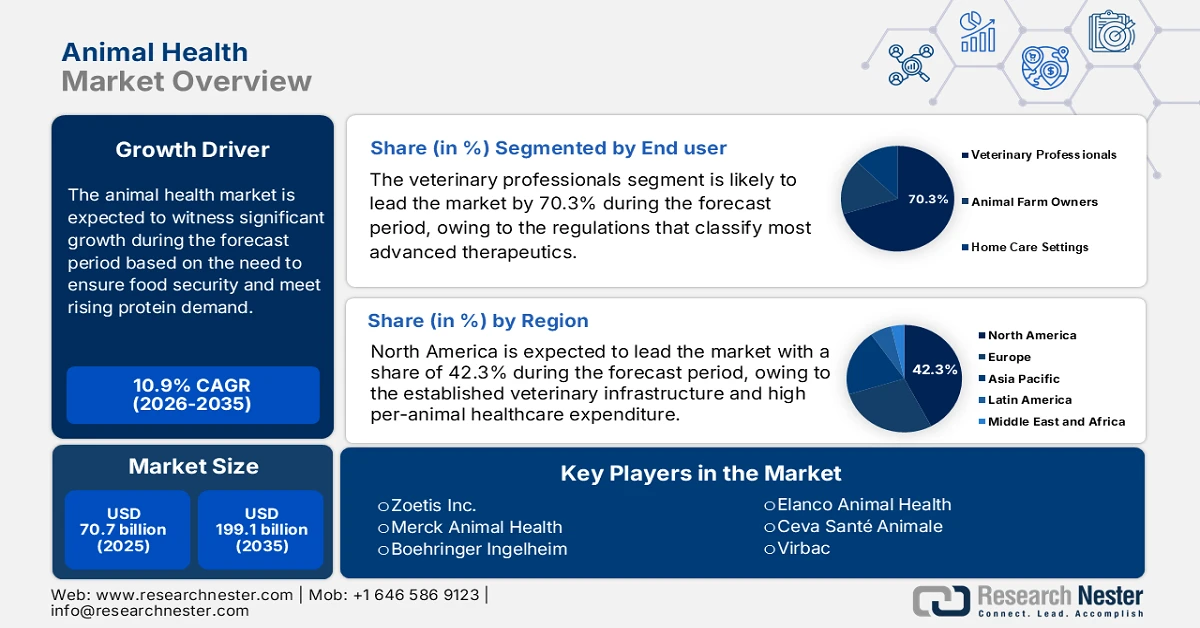
Animal Health Market Outlook:
Animal Health Market size was valued at USD 70.7 billion in 2025 and is projected to reach USD 199.1 billion by the end of 2035, rising at a CAGR of 10.9% during the forecast period, i.e., 2026-2035. In 2026, the industry size of animal health is estimated at USD 78.4 billion.
The global market is a critical component of agricultural and public health infrastructure focused on the development and distribution of products for disease prevention, management, and treatment in both livestock and companion animals. The market’s scale is substantial, driven by the need to ensure food security and meet rising protein demand. For example, the data from the Agencia IBEG Noticias in September 2024 shows that the value of livestock products in Brazil increased by 5.4% in 2023 and reached USD 122.4 billion. This data highlights the economic importance of maintaining animal health and productivity. The regulatory oversight is an important factor defining the industry; agencies such as the U.S. FDA Center for Veterinary Medicine are responsible for approving new animal drugs and feed additives, ensuring their safety and efficacy.
Market dynamics are influenced by the long cycle of product development and significant capital investment in research. The FDA’s CVM approves a limited number of new animal drug applications annually, reflecting the high regulatory and scientific barriers to entry. The growth in the companion animal segment correlates with the demographic trends, as noted by the American Pet Products Association report in March 2025, which states that nearly 94 million U.S. households own at least one pet, creating a sustained demand for veterinary services and pharmaceuticals. From the production animal perspective, disease outbreaks have major economic repercussions. The Animal and Plant Health Inspection Service implements a control program for diseases such as Highly Pathogenic Avian Influenza. The data from Congress.gov in April 2025 shows that nearly 1,689 flocks were confirmed with HPAI, affecting 168.62 million birds in 2022. This reality reinforces the market foundation in preventive healthcare, including vaccination and biosecurity, as essential for economic stability and continuity in the supply chain.
Total Number of HPAI H5N1 Detections by Species in Mammals in the United States (2022-2024)
|
Species Detection by Year |
2022 |
2023 |
2024 |
Overall |
Species Detection by Year |
|
Abert’s squirrel |
0 (0%) |
1 (0.9%) |
0 (0%) |
1 (0.2%) |
Abert’s squirrel |
|
American black bear |
1 (0.9%) |
3 (2.7%) |
0 (0%) |
4 (1.0%) |
American black bear |
|
American marten |
0 (0%) |
1 (0.9%) |
0 (0%) |
1 (0.2%) |
American marten |
|
American mink |
0 (0%) |
0 (0%) |
1 (0.6%) |
1 (0.2%) |
American mink |
Source: NLM February 2025