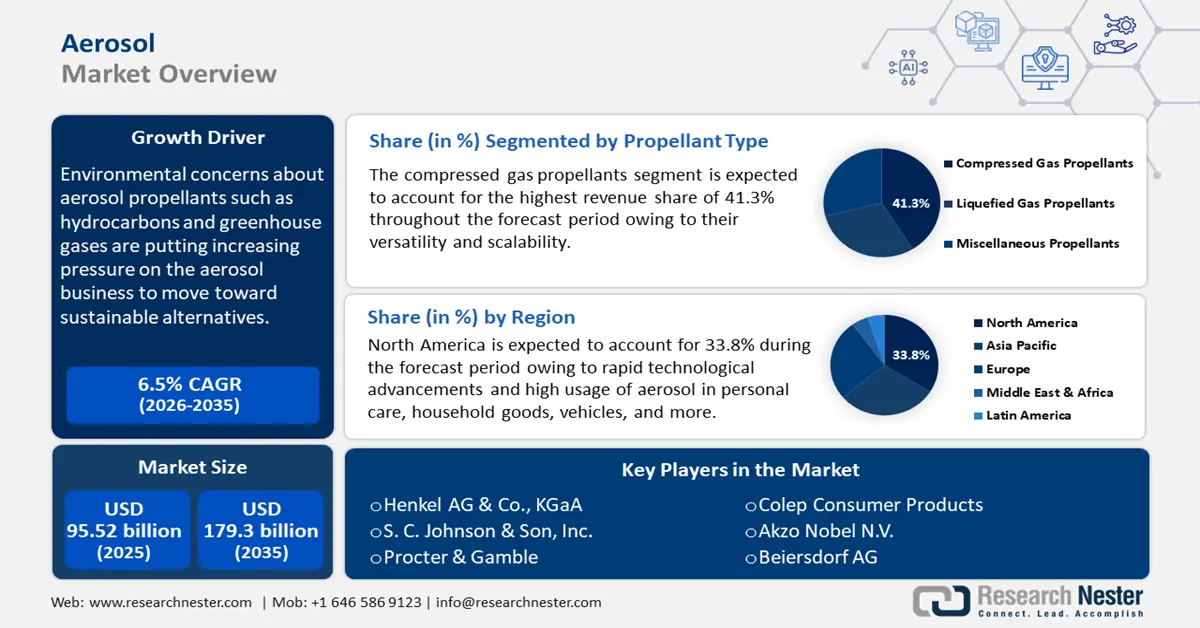
Aerosol Market Outlook:
Aerosol Market size was valued at USD 95.52 billion in 2025 and is expected to reach USD 179.3 billion by 2035, registering around 6.5% CAGR during the forecast period i.e., between 2026-2035. In the year 2026, the industry size of aerosol is evaluated at USD 101.11 billion.
The global aerosol market is rapidly expanding due to rising concerns about aerosol propellants such as hydrocarbons and greenhouse gases. This is putting increasing pressure on the aerosol business to move toward sustainable alternatives. Using nitrogen or compressed air as propellants is one possible approach that reduces environmental effects. Major companies in the aerosol industry are increasingly concentrating on making recyclable aerosols to lessen their carbon impact and increase demand for their goods. In June 2022, Ball Corporation unveiled a new aluminum aerosol can with a low carbon footprint to its science-based 2030 targets and goal of net-zero emissions before 2050. The recently released cans contain low-carbon aluminum and are made using renewable energy sources, including, hydroelectric electricity, and up to 50% recycled material.
Moreover, the DIY and automotive industries are seeing a sharp increase in the use of aerosol products, essential for convenience and innovation. Aerosols simplify car maintenance activities including lubrication, corrosion prevention, and cleaning by providing accurate application and effortless handling. Aerosol products are popular among consumers who prefer DIY as these are easy to use and make a variety of household jobs, from painting and applying adhesive to cleaning and sealing, efficient. Aerosols are considered essential tools in both professional and amateur settings, due to the growing trend toward hassle-free solutions that save time and effort. Manufacturers are broadening their product offerings in response to the growing demand, which is driving the aerosol market's growth into these important industries.